

Among the drinks served in Hong Kong's Cha Chaan Tengs (tea restaurants), milk tea and lemon tea have long dominated the top spots. Every day, more than 2.5 million cups of milk tea are consumed across the city, which demonstrates how deeply it is rooted in local life. Yet as we enjoy these familiar beverages day after day, we may not always notice the subtle hints of bitterness and astringency they share. So where do these flavours come from? And how do we sense them?
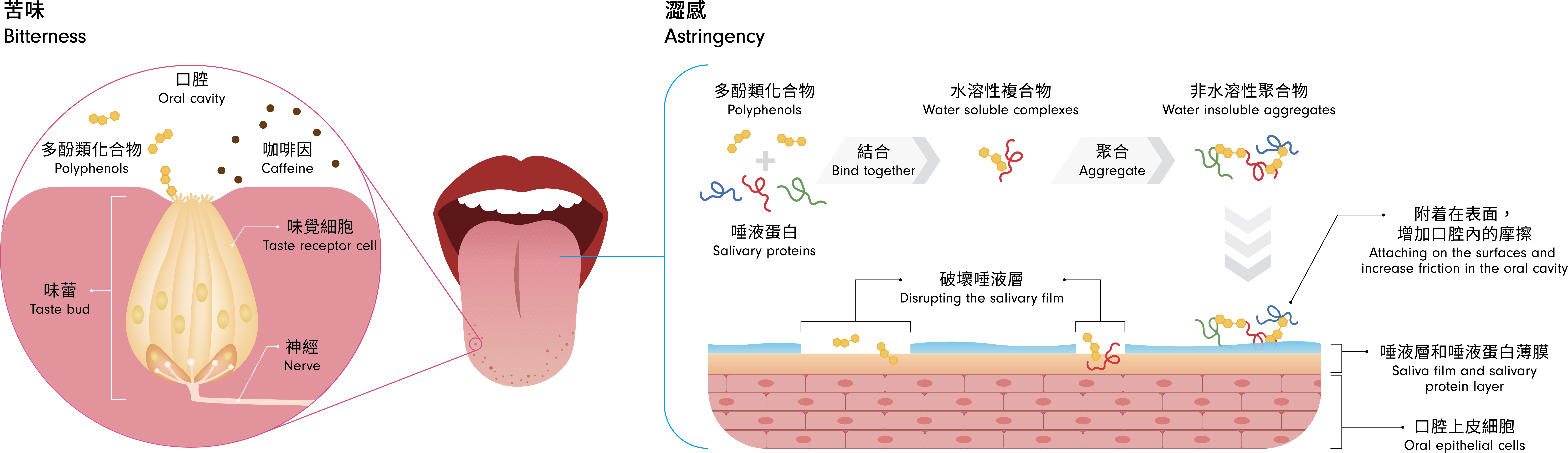
Tea contains a variety of compounds including caffeine, amino acids and polyphenols, that collectively shape its flavour and create the distinct sensations of bitterness and astringency. Bitterness is one of the five basic tastes. The surface of our tongue is covered with small papillae that house taste buds. Each taste bud is made up of taste receptor cells that are capable of binding with flavour molecules. When we drink tea, bitter compounds such as caffeine and a group of polyphenolic compounds known as catechins dissolve in saliva and bind to bitter taste receptors. This binding triggers neural signals that the brain interprets as a bitter taste.
Astringency, on the other hand, is a complex oral sensation, often described as a feeling of dryness, roughness or puckering in the mouth. It is mainly caused by tea polyphenols, but the exact mechanism is not yet fully understood. A prevailing view is that astringency is a form of tactile perception. When polyphenols bind with salivary proteins responsible for lubrication, they form precipitates that adhere to the tongue and oral surfaces. This reduces lubrication and stimulates sensory nerves, resulting in the drying, puckering sensation. Recent studies also suggest that some polyphenols, such as catechins, may directly stimulate oral sensory cells, indicating that astringency may arise from multiple mechanisms.
In fact, all types of tea leaves, including black tea, green tea and oolong tea, originate from the same plant, Camellia sinensis. It is the processing method that determines the final flavour profile. Based on the processing method, the oxidative enzymes and polyphenols in the tea leaves undergo varying degrees of oxidation. This process is commonly known as fermentation, where a diverse mix of oxidised compounds is formed in different ratios, giving each type of tea its distinctly unique flavour. Cha Chaan Tengs usually use fully fermented black tea to make milk tea and lemon tea. During processing, the leaves are first withered to remove moisture, then rolled to break down their structure. This allows catechins to react with oxygen under the action of natural enzymes, transforming into theaflavins and thearubigins, which give black tea its characteristic reddish-brown colour.
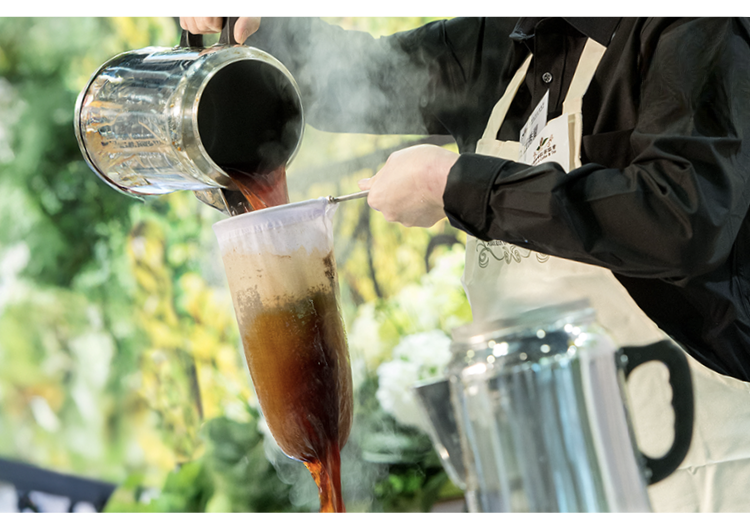
In traditional Cha Chaan Tengs, tea masters first prepare a concentrated tea base for making milk tea or lemon tea. Some use a technique known as "force-pouring", where the boiling tea is repeatedly poured from a height through a cloth filter three to four times. This process aerates the brew, giving it a smoother texture and is believed to soften its astringency.
The bitterness and astringency in tea are natural characteristics of the compounds it contains. When paired with evaporated milk or fresh lemon, together with the skill of tea masters, these elements come together to create the layered flavours of classic Hong Kong-style milk tea and lemon tea that remain popular across generations.