
Many of Hong Kong's iconic foods have names that reflect tradition and appearance, rather than their actual ingredients or origins. A classic example is the pineapple bun, a beloved local treat that contains no pineapple at all. Its name comes from the bun's golden, cracked crust that resembles the rough pattern of a pineapple's skin. But what gives the pineapple bun its distinctive appearance and the perfect combination of a crunchy top with pillowy-soft bread?
Pineapple buns consist of two parts: a soft bread base and a sweet, crunchy crust. The bread is made from a sweet dough using strong flour, yeast, eggs, sugar, water, and lard, similar to most Hong Kong-style breads. To create a soft texture, bakers knead the dough until gluten develops. Strong flour is commonly used in breadmaking because it has a high protein content, usually between 12 to 14 g per 100 g of flour. When mixed with water and kneaded, the two main proteins in the flour, glutenin and gliadin, link together to form a gluten network that makes the dough elastic and stretchy.
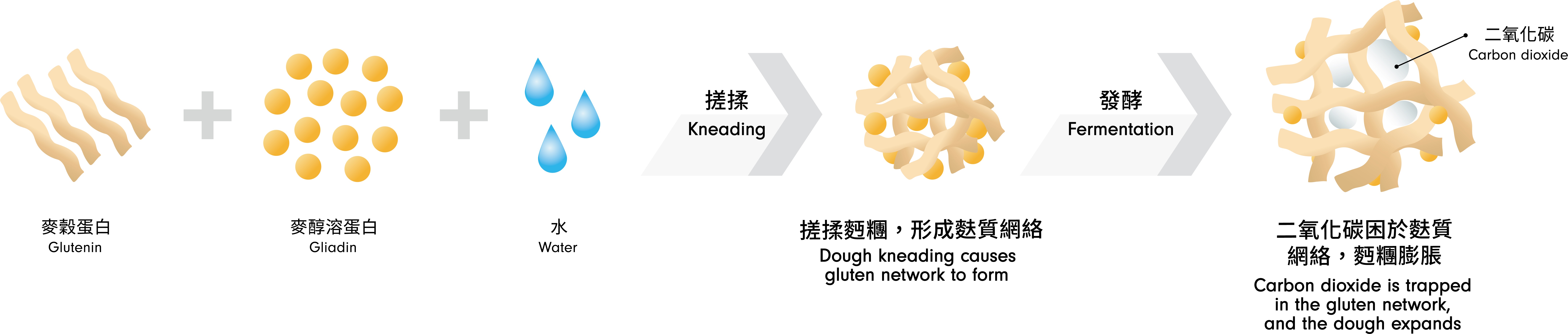
The bread's fluffy texture also comes from the action of yeast, a single-celled fungus that breaks down the starch in the flour into glucose. Through fermentation, yeast converts the glucose into byproducts, such as carbon dioxide and ethanol. The carbon dioxide becomes trapped in the gluten network. As more gas is produced, the network expands, causing the dough to rise and giving the bun its soft, airy texture.
The signature golden "pineapple crust" is made from a mixture of lard, butter, milk powder or evaporated milk, eggs, cake flour, sugar, and raising agents such as baking powder, baking soda, or ammonium bicarbonate, the last of which is often used in traditional Chinese pastries. These chemical raising agents release carbon dioxide when exposed to moisture or heat. As the gas rapidly expands during baking, it causes the smooth surface of the crust dough to puff and crack, forming the signature pineapple-like pattern. Before baking, the crust is brushed with egg wash, which contains proteins and sugars that undergo the Maillard reaction when heated. This reaction produces a variety of aromatic compounds and brown pigments known as melanoidins, which enhance both the colour and aroma of the buns.
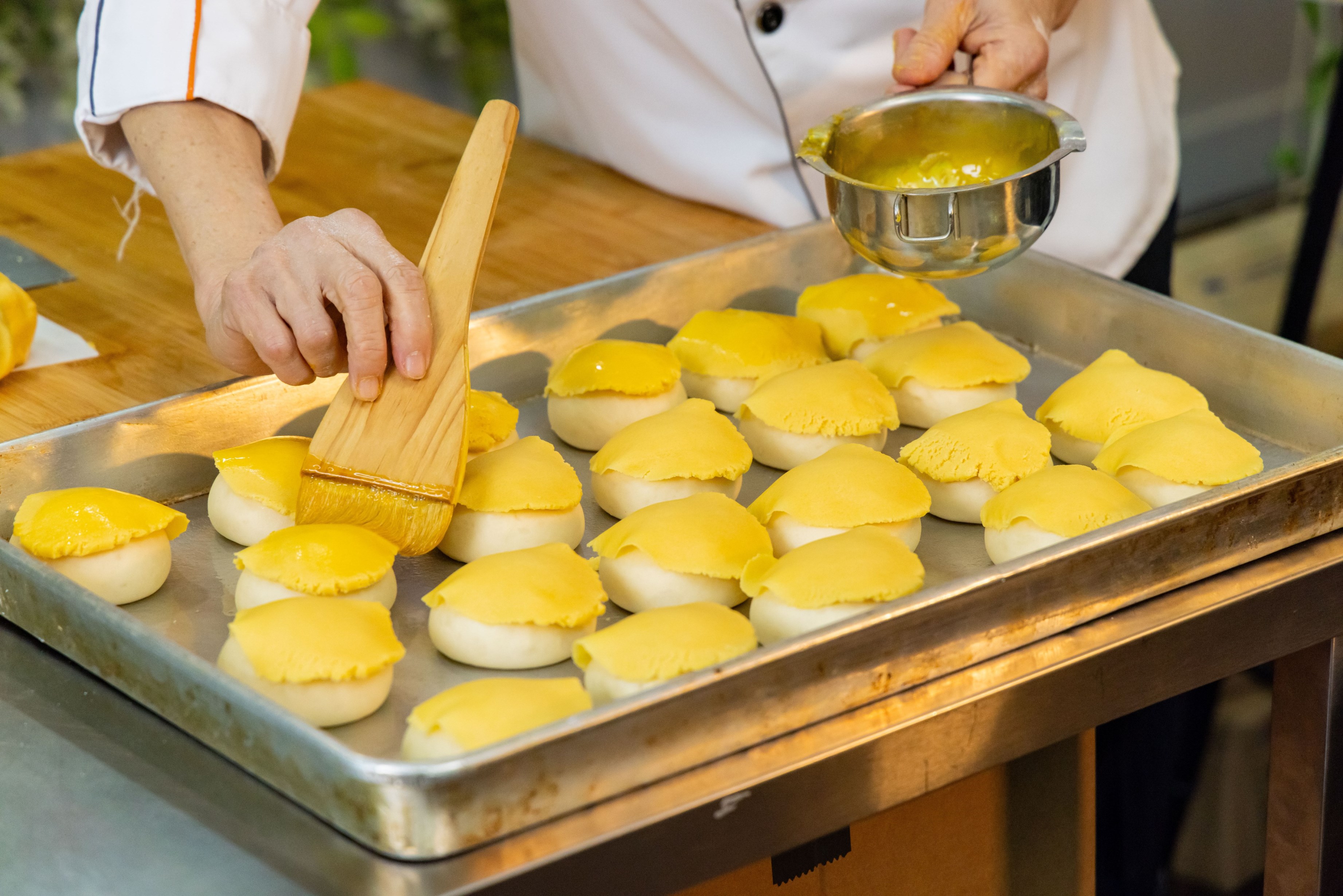
▲The Maillard reaction refers to the complex series of chemical reactions that occur between reducing sugars (such as glucose and fructose) and proteins and amino acids in food under high temperature. This reaction produces a variety of aromatic compounds and brown pigments known as melanoidins, which enhance the aroma and colour of food. Similar to pineapple buns, many Hong Kong-style breads such as cocktail buns, are also brushed with egg wash before baking, giving them a golden crust through the Maillard reaction. (Photo courtesy of Intangible Cultural Heritage Office)
Pineapple buns first appeared in Hong Kong in the 1960s. Inspired by a traditional Chinese pastry known as the walnut cookie, local cafes began topping plain buns with a layer of sweet, crunchy crust to create a more flavourful treat. Did you guess the origin correctly? Do you think pineapple buns and walnut cookies share any similarities?