

Fish balls are a versatile favourite in Hong Kong. They are enjoyed in countless ways throughout the day, whether as a bowl of fish ball noodles at a local shop or a skewered snack coated in curry sauce from a street vendor. Regardless of how they are prepared, fish balls are loved for their savoury fish flavour and springy, bouncy texture. Achieving that perfect texture requires more than just fresh ingredients, it demands an understanding of the transformations in protein structure that occur during preparation.
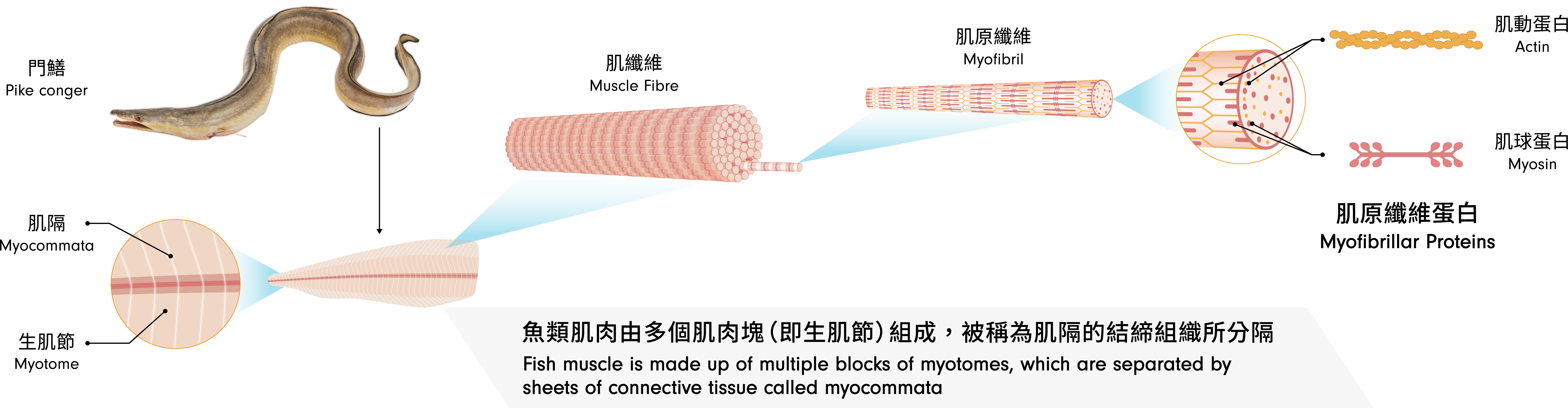
The lateral muscles of the fish, running from behind the head to the tail, are the main part used to make fish balls. These muscles are composed of specialised cells called muscle fibres, which contain large amounts of myofibrils. Myofibrils consist primarily of two key proteins, actin and myosin, arranged in parallel and overlapping structures. White-fleshed fish are commonly chosen for their thicker muscle fibres, lower fat content, and firmer texture, which make them ideal for forming a fine fish paste. Local producers often use pike conger as the main ingredient, blending it with seasonal fish such as croaker or golden threadfin bream, according to their own recipes, to create fish balls with a distinctive flavour.
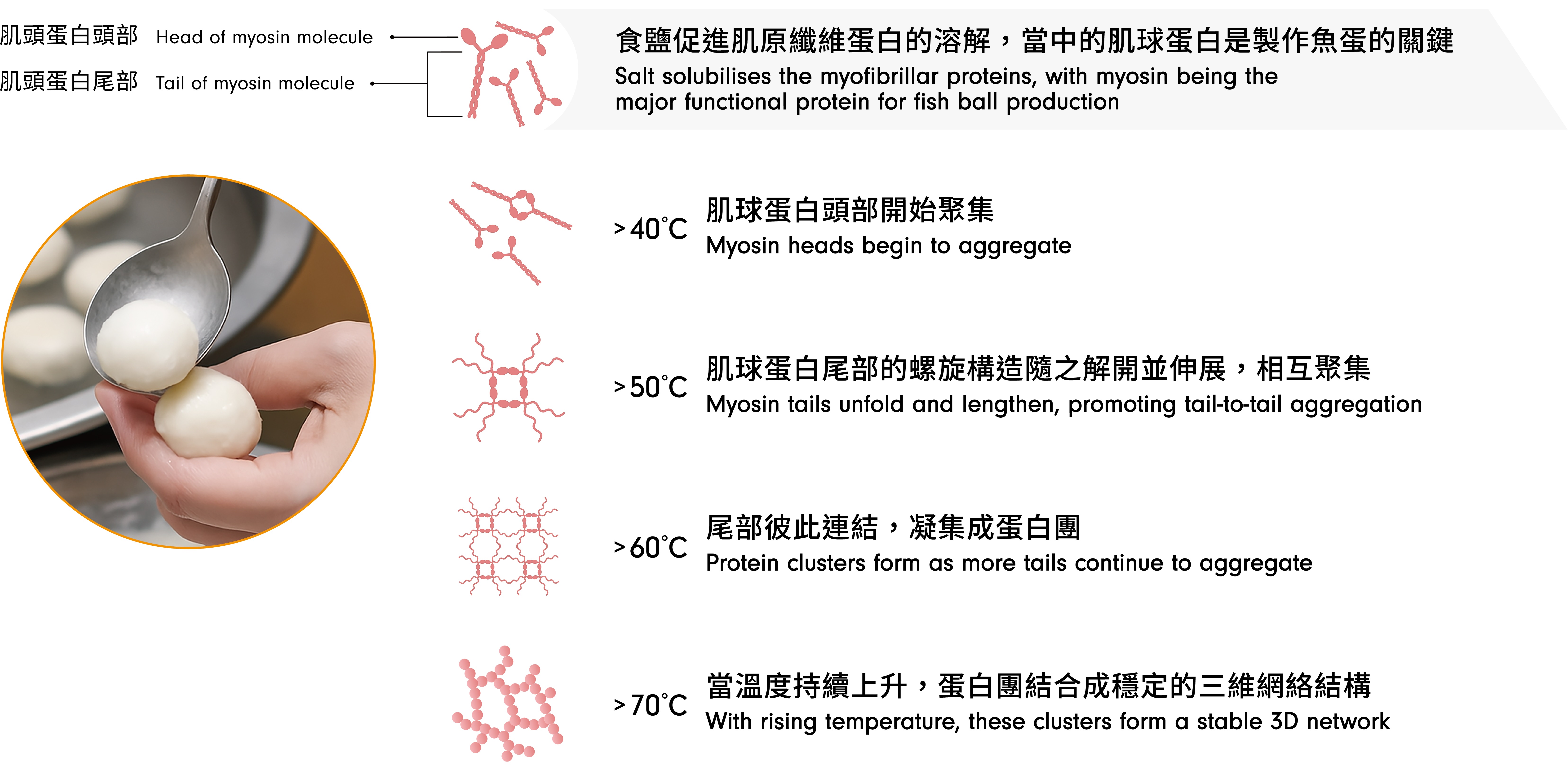
Fish balls are made by blending fish meat with water to form a smooth paste, which is then shaped into balls and cooked. The first step is to carefully separate the meat from the skin and bones before chopping and mincing it. This is followed by a crucial step known as pounding, where the minced fish is rapidly mixed with water, ice, salt and other seasonings to form a fine and sticky paste. Salt not only enhances flavour, but also helps solubilise the myofibrillar proteins in the fish muscle, with myosin being the major functional protein in fish ball production. Sodium and chloride ions in salt interact with the proteins, altering their structure and increasing their affinity for water molecules, which gives the paste its viscosity. Ice is added to control temperature and maintain moisture. This is crucial because the heat generated during mixing could activate enzymes, causing proteins to set too early and affecting the final texture.
After shaping into balls, the fish paste is immersed in water at around 40°C to 50°C. At this stage, the heads of the myosin molecules begin to aggregate, helping the fish balls set and hold their shape. As cooking continues at higher temperatures, the myosin tails unfold and lengthen, then link together to form an ordered 3D gel network. This network traps water molecules, giving fish balls their bouncy texture. This process is known as "gelation".
To enhance bounciness, some producers add starches such as cornstarch or potato starch to the fish paste. When heated, the starch granules absorb water and expand, filling spaces within the protein gel network. This helps retain moisture and gives the fish balls a whiter and glossier appearance. However, some traditional fish ball makers insist on using pure fish meat without any starch or additives. Although the texture may differ slightly, the fish flavour is richer, and the skill required is more demanding.