

For many, starting the day with an aromatic cup of milk tea or coffee is an indispensable "wake-up call". Without that morning drink, they may feel sluggish and struggle to concentrate throughout the day. While most people know that caffeine provides the energy boost, how it works in the brain is truly fascinating.
From the moment we wake up, our brains begin producing a chemical called adenosine, which builds up over time. As more adenosine binds to nerve cell receptors, it suppresses neuronal activity, making us feel tired and slowing our responses. Since caffeine has a similar chemical structure to adenosine, it can "mimic" adenosine and compete for the same receptor sites. By occupying these receptors and blocking adenosine, caffeine helps keep us alert.
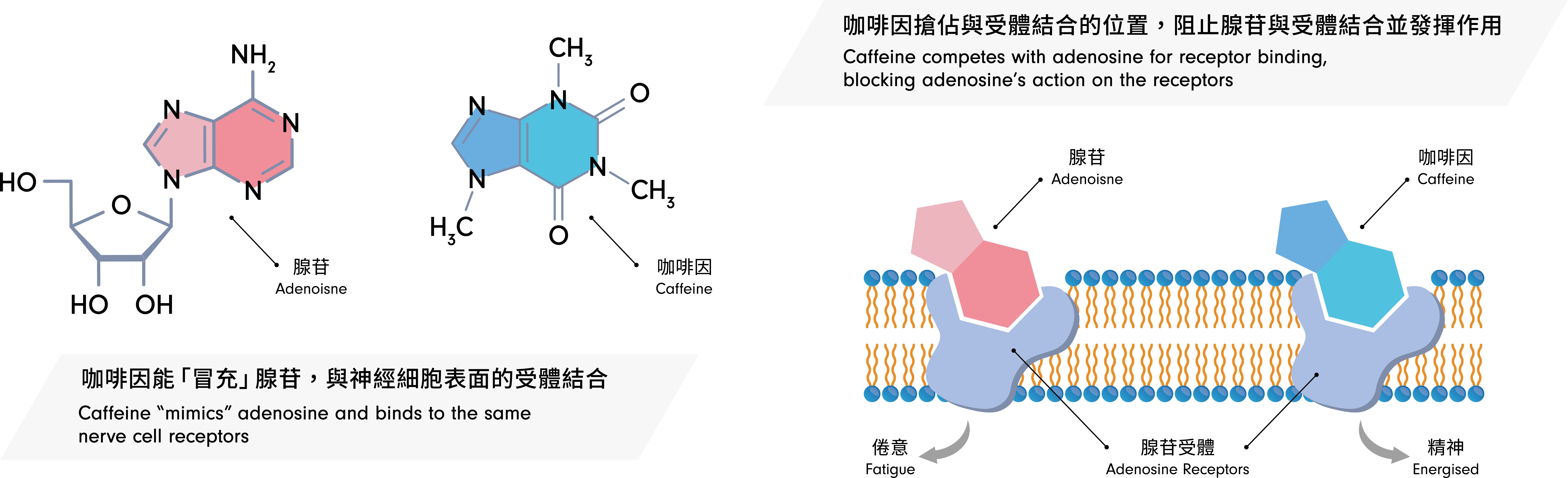
However, caffeine affects everyone differently. Genetic variations influence how sensitive our adenosine receptors are to caffeine and how efficiently our body metabolises it. This is why some people can drink a large cup of milk tea or coffee and feel little effect, while others may experience a racing heartbeat or have trouble sleeping after only a few sips.
Take, for example, the milk tea and coffee served in Cha Chaan Tengs (tea restaurants): a typical 240 ml cup of milk tea contains an average of about 186 mg of caffeine, while the same volume of coffee can contain up to 300 mg*. This stems largely from preparation methods. Cha Chaan Tengs usually use a steeping method, where tea leaves or coffee grounds are brewed with hot water, leading to a higher caffeine content. In contrast, coffee shops often serve espresso-based drinks. Although the espresso itself has higher caffeine concentration, the smaller serving sizes and the addition of water or milk results in lower overall caffeine content than beverages from Cha Chaan Tengs.

For most healthy adults, the recommended daily caffeine intake is no more than 400 mg. So whether you rely on these drinks for an energy boost or simply enjoy their rich flavour, remember to consume them in moderation!
*Data was sourced from a collaborative survey by the Consumer Council and the Centre for Food Safety, published in Issue 444 of CHOICE Magazine (only available in Chinese).