

Egg tarts are one of the most authentic representations of Hong Kong's culinary identity. In recent years, modern and creative variations have emerged, attracting visitors who come specifically to try them and "check in" with photos. Traditional flaky egg tarts, however, are known for their crisp, layered crust. Combining Western culinary traditions with Chinese baking techniques, they have become an iconic symbol of the local history and food culture.
Egg tarts are believed to have first appeared in Guangzhou in the 1920s, evolving from the Western fruit tart. The crust followed a butter-based Western method, while the filling took inspiration from Chinese steamed egg, resulting in a texture similar to the shortcrust-style egg tarts seen today. In the 1940s and 1950s, pastry chefs introduced the technique of making egg tarts to Hong Kong. As butter was costly at the time, they switched to lard and incorporated Chinese puff pastry techniques to create the local-style tart with its delicate, crisp layers.
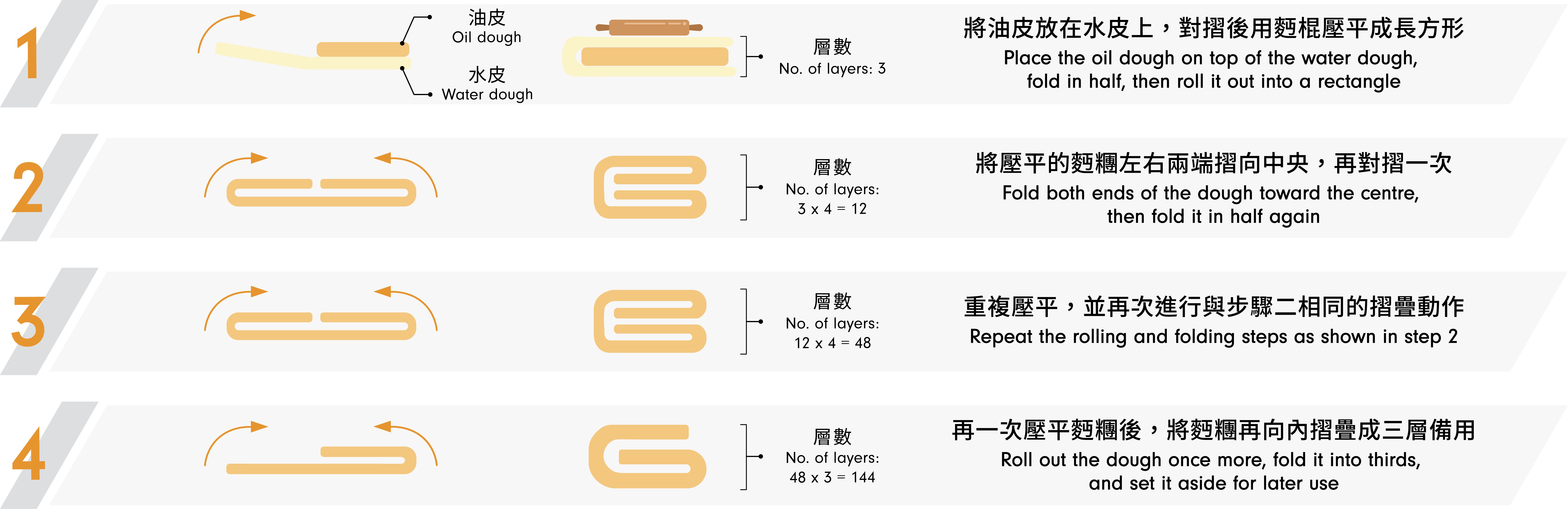
The flaky crust is made by repeatedly folding and layering two types of dough: "water dough" and "oil dough". The water dough is made from flour, egg, and water, while the oil dough consists mainly of lard (sometimes blended with butter or vegetable oil) and flour. Some recipes also include ingredients like milk powder, vanilla essence, or peanut butter to enhance the flavour. After chilling, the two types of dough are repeatedly rolled and folded to create many thin layers. Depending on the folding method, the crust can have around 60 to over 100 layers, and in some cases more than 300. Here is an example of the folding process used by one Cha Chaan Teng:
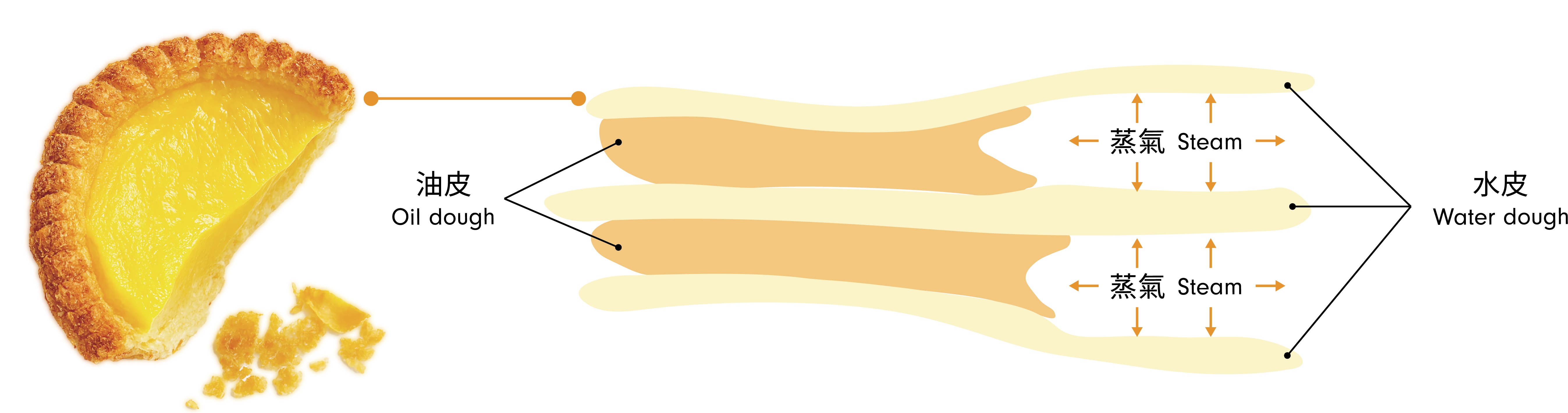
During baking, moisture in the water dough turns to steam. Trapped by the fat in the oil dough, the steam builds up pressure that forces the layers apart, causing the pastry to puff up. This creates the crust's multi-layered structure.
Lard is more than an economical substitute; it is essential for the crust's flaky texture. Compared to butter, lard has a higher melting point and fat content, making it less likely to melt during folding and helping to keep the layers distinct. What's more, lard has a very low water content. It coats the flour particles evenly, preventing the proteins in the flour from binding with water to form gluten. This results in a lighter and crisper crust.
Portuguese egg tarts (Pastel de Nata) also have a flaky crust. While they may look similar to Hong Kong-style egg tarts, their preparation is quite different. The Portuguese version is prepared by layering butter directly into a dough made mainly with cake flour. The dough is then folded, rolled into a log, cut into portions, and shaped into tart shells. The fillings also differ: Hong Kong-style tarts use a filling made from whole eggs, milk, and sugar, while Portuguese egg tarts use egg yolks, cream with a higher fat content, and cooked sugar, resulting in a richer custard with caramelised spots on top. From crust to filling, the two styles offer distinctly different flavour experiences.