
Century eggs (known as "pei dan" in Cantonese) are a traditional preserved delicacy, most commonly made from duck eggs, and are the signature ingredient in Cantonese cuisine. Whether served in congee or paired with vegetables, they impart a unique flavour. Their dark brown appearance often intimidates foreigners, leading to the misconception that the eggs have spoiled after prolonged storage, hence the names "century eggs", or "thousand-year eggs". In reality, transforming fresh duck eggs into this distinctive delicacy requires just a few weeks to a few months of curing.
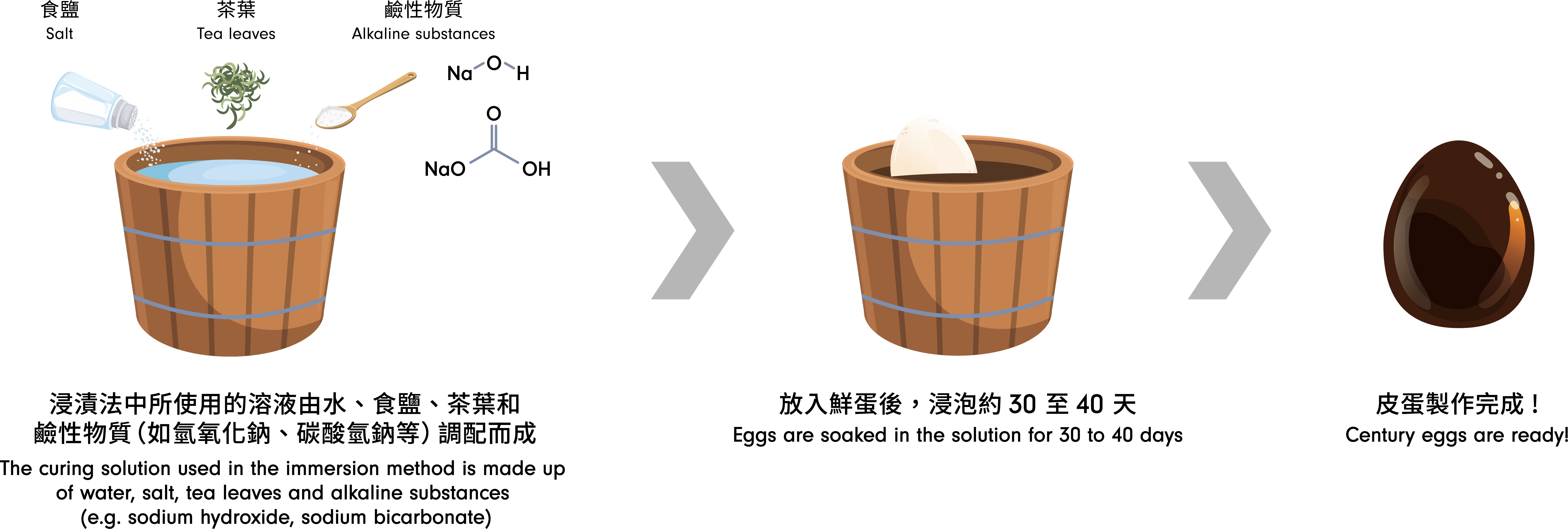
The making of century eggs involves soaking fresh duck eggs in an alkaline mixture. Alkaline substances gradually penetrate the eggshell and initiate the chemical transformation that causes the proteins to denature and aggregate, setting both the egg white and yolk. In the traditional method, the eggs are coated in a paste made from ash, quicklime, sodium carbonate and salt, then rolled in rice husks and left to cure. Today, the immersion method is more common: eggs are soaked in a solution of water, tea leaves, salt and alkaline substances such as sodium hydroxide or baking soda (sodium bicarbonate) for 30 to 40 days. Some producers even combine both methods by first soaking the eggs in an alkaline solution and then coating them with the paste.
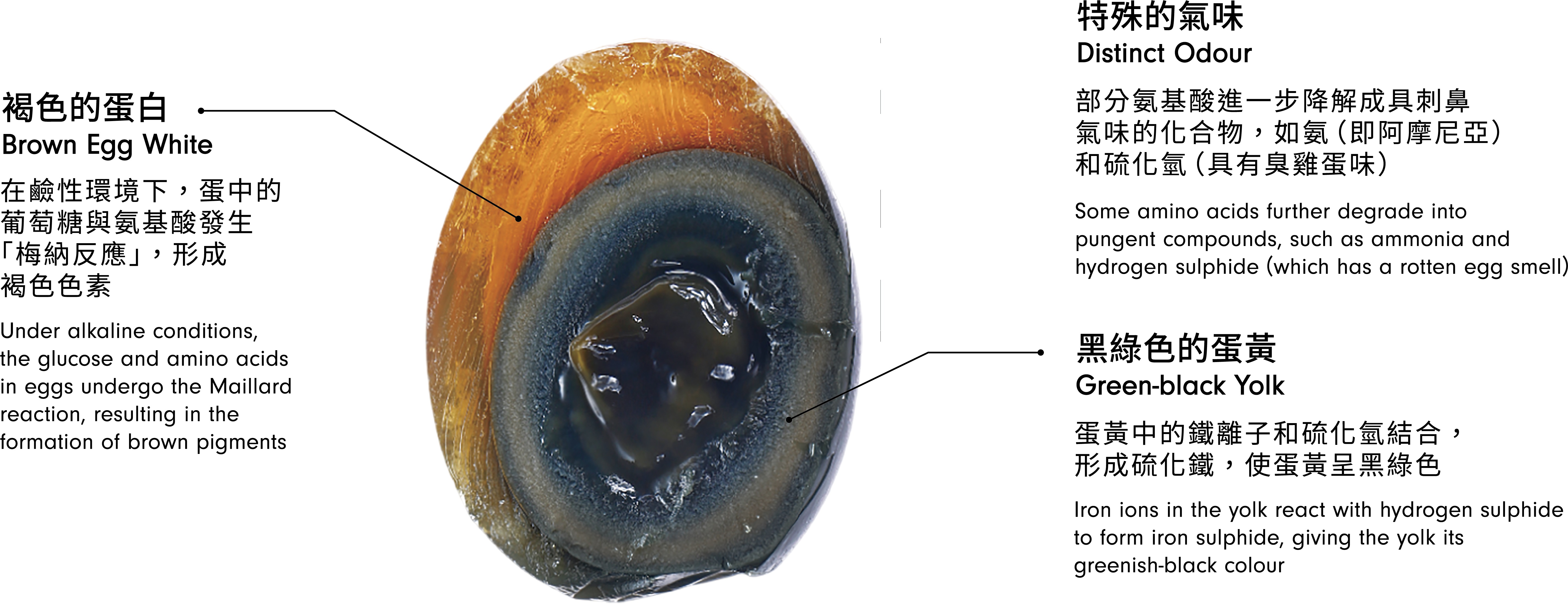
Once the shell is peeled off, the first thing you will notice is the dark brown, springy egg white. During curing, hydroxide ions from the alkaline mixture diffuse into the egg white and raise its pH. This causes the proteins to denature and disrupts their original structure. Over time, the proteins aggregate to form a stable gel, giving the egg white its springy, jelly-like texture. Meanwhile, some proteins break down into amino acids that react with glucose in the egg through the Maillard reaction. This process produces brown pigments known as melanoidins, which are responsible for the characteristic colour of the egg white.
When the egg is cut open, it reveals a striking dark green yolk and releases a distinctive, strong odour. This smell comes from the break down of sulphur-containing amino acids during the curing process, which produces pungent compounds like ammonia and hydrogen sulphide. The hydrogen sulphide then reacts with metal ions in the yolk, for instance, combining with iron ions to form iron sulphide, the compound that gives the yolk its greenish-black colour.
In traditional methods, lead oxide (massicot) was occasionally added to the curing mixture to improve success rates and ensure consistent quality. This additive helped the eggs set properly while also reacting with hydrogen sulphide to form deposits that blocked the pores in the eggshell. This mechanism controlled the penetration rate of alkaline substances into the eggs. However, due to the health risks of lead, this practice has gradually been phased out. Most manufacturers now use safer alternatives like copper or zinc compounds to produce lead-free century eggs.
Century eggs may often play a supporting role in dishes, but they are the stars of a series of chemical reactions. Their appearance and smell may seem unusual, but they are simply the results of science in action.