
The Colours of Leaves
Published on 27 November 2023
While many people are captivated by the beautiful and varied colours of flowers, have you ever noticed leaves also have a remarkable diversity of pigments? Chlorophyll, carotenoids and anthocyanins are the common pigments in leaves. The leave colours are determined by the proportion of these pigments they contain.
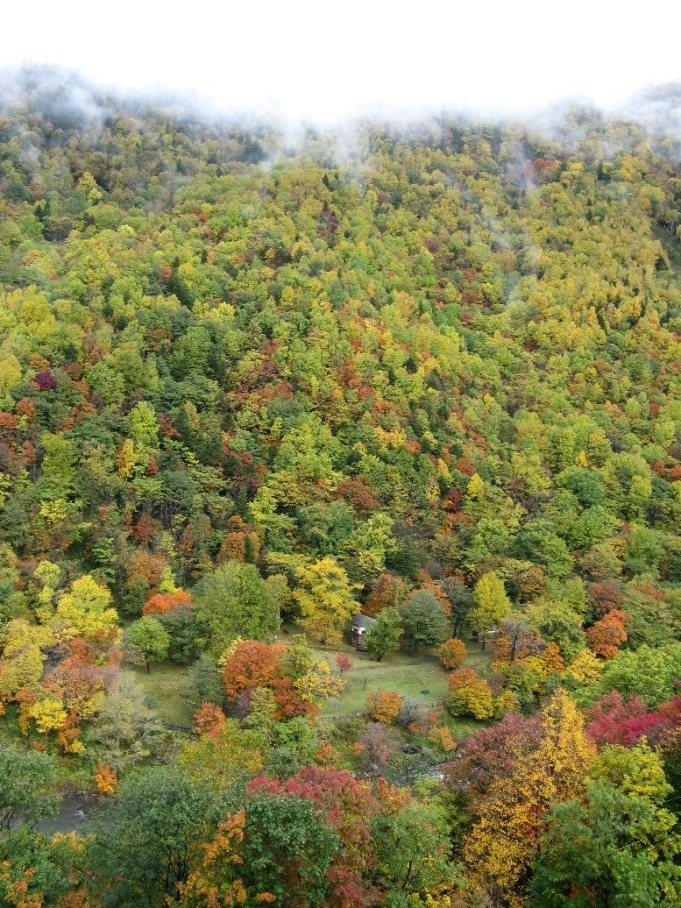
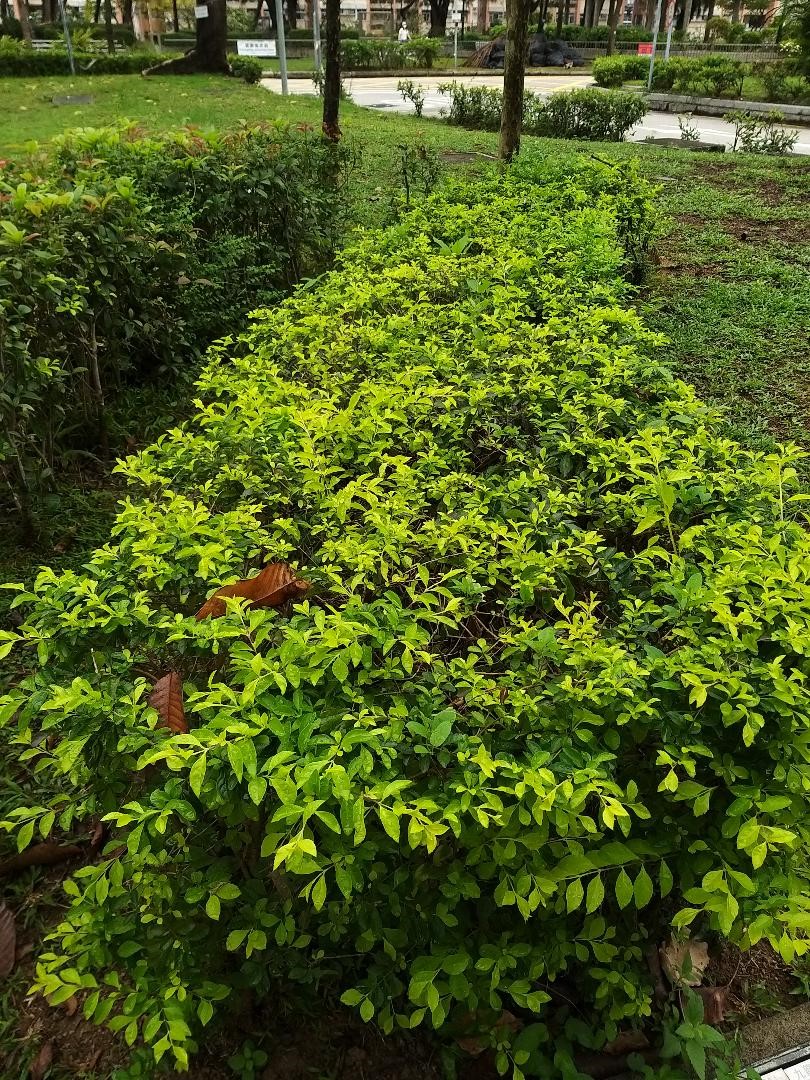
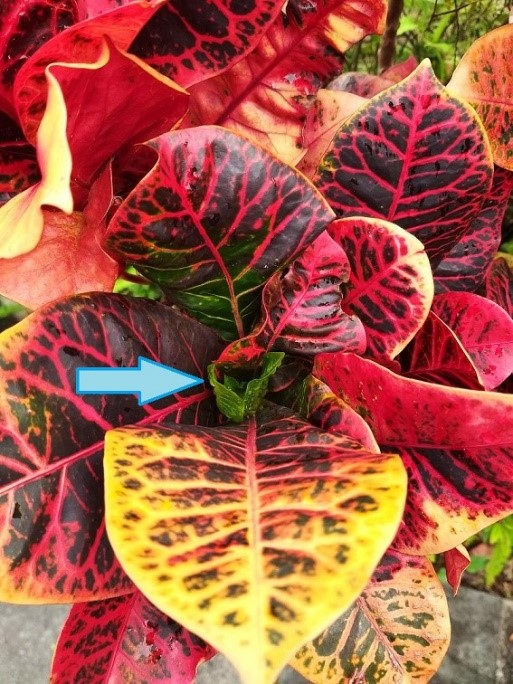
(Left) Autumn foliage have a range of colours; (Right) Leaves of the same plant may have different shades of green
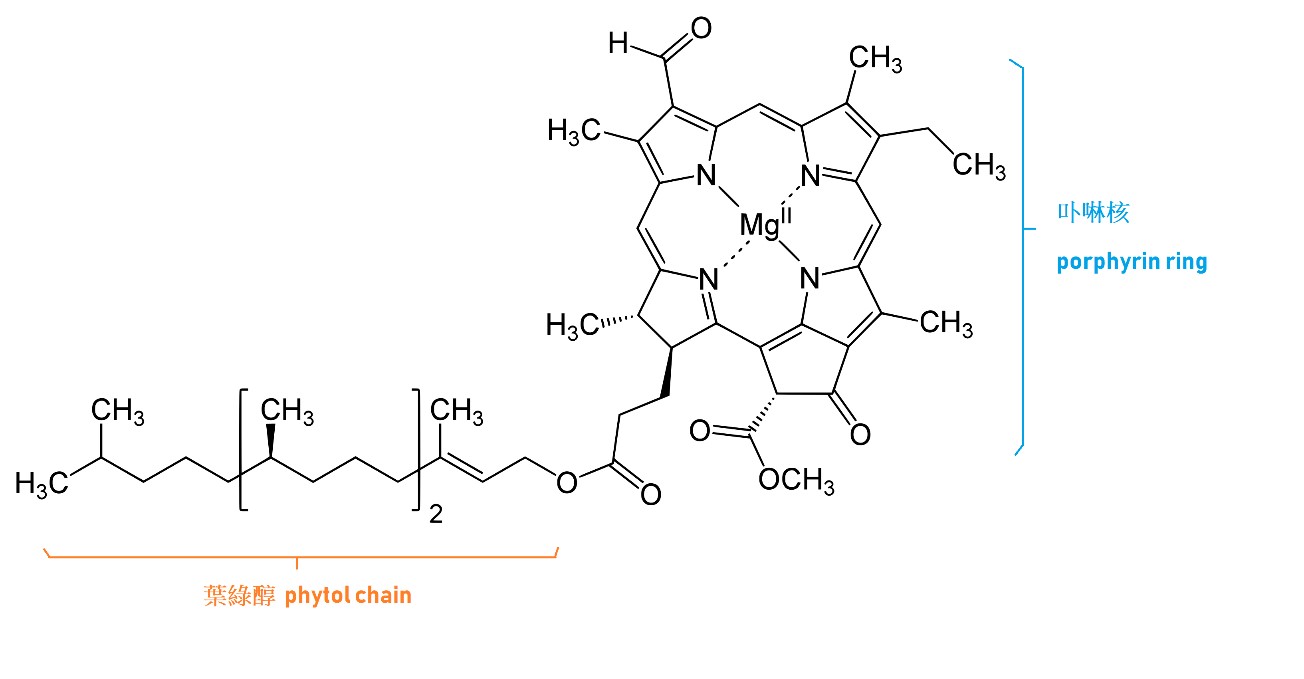
Chlorophyll consists of two parts – a porphyrin ring and a long hydrocarbon side chain known as phytol. Chlorophyll reflects green light, and absorbs red and blue light most strongly, which is why leaves typically appear green.
The structure of chlorophyll
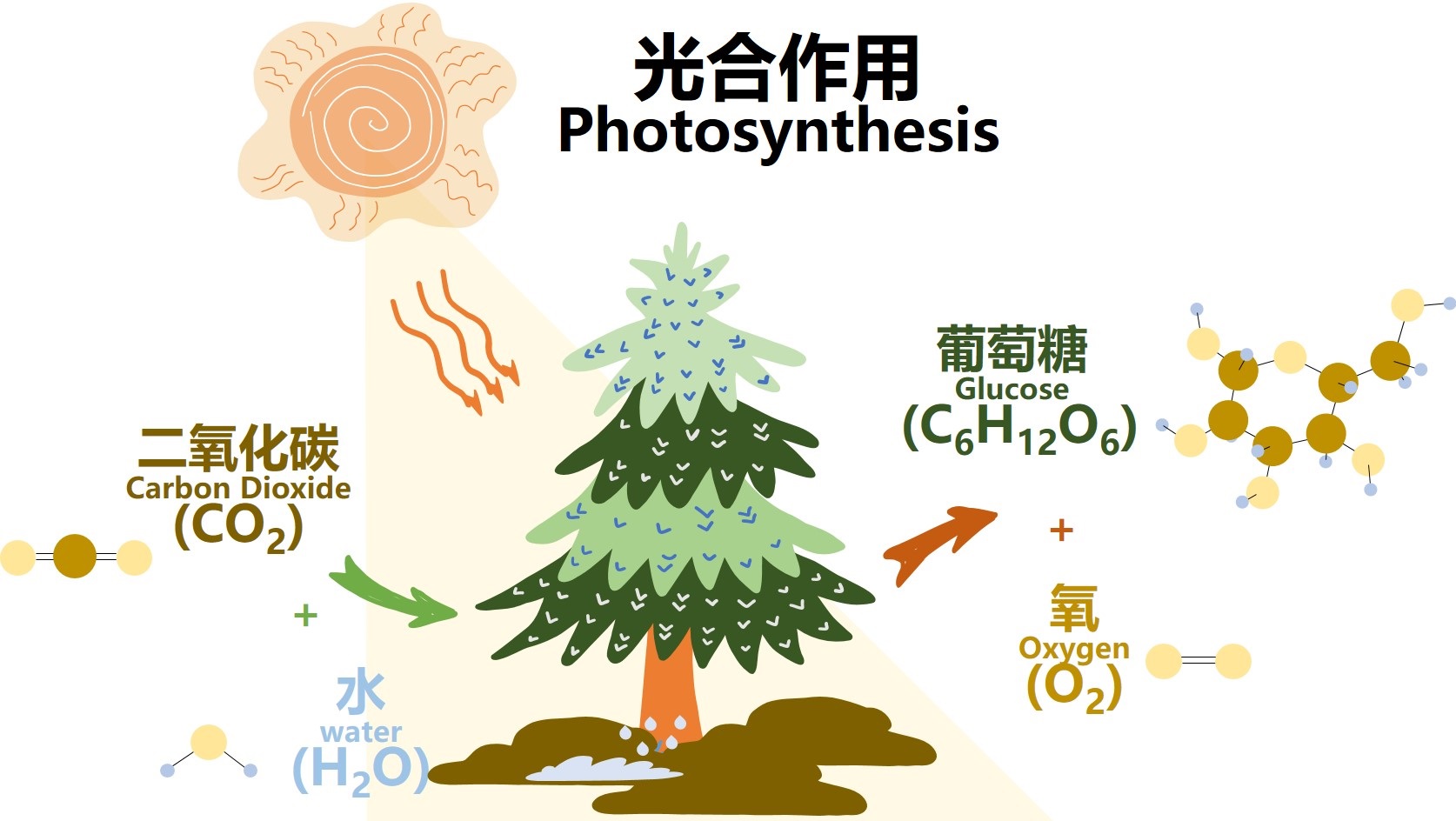
More importantly, chlorophyll is responsible for the process of photosynthesis. Using sunlight as energy, it converts carbon dioxide and water into glucose and oxygen. Glucose is the main nutrient for plant growth.
The process of photosynthesis
Carotenoids are yellow, orange and red pigments that are fat-soluble. They can be divided into two main subgroups – carotenes and xanthophylls. They act as light harvesting accessory pigments by absorbing light to drive the process of photosynthesis. On the other hand, they also protect chlorophyll by absorbing excess energy.
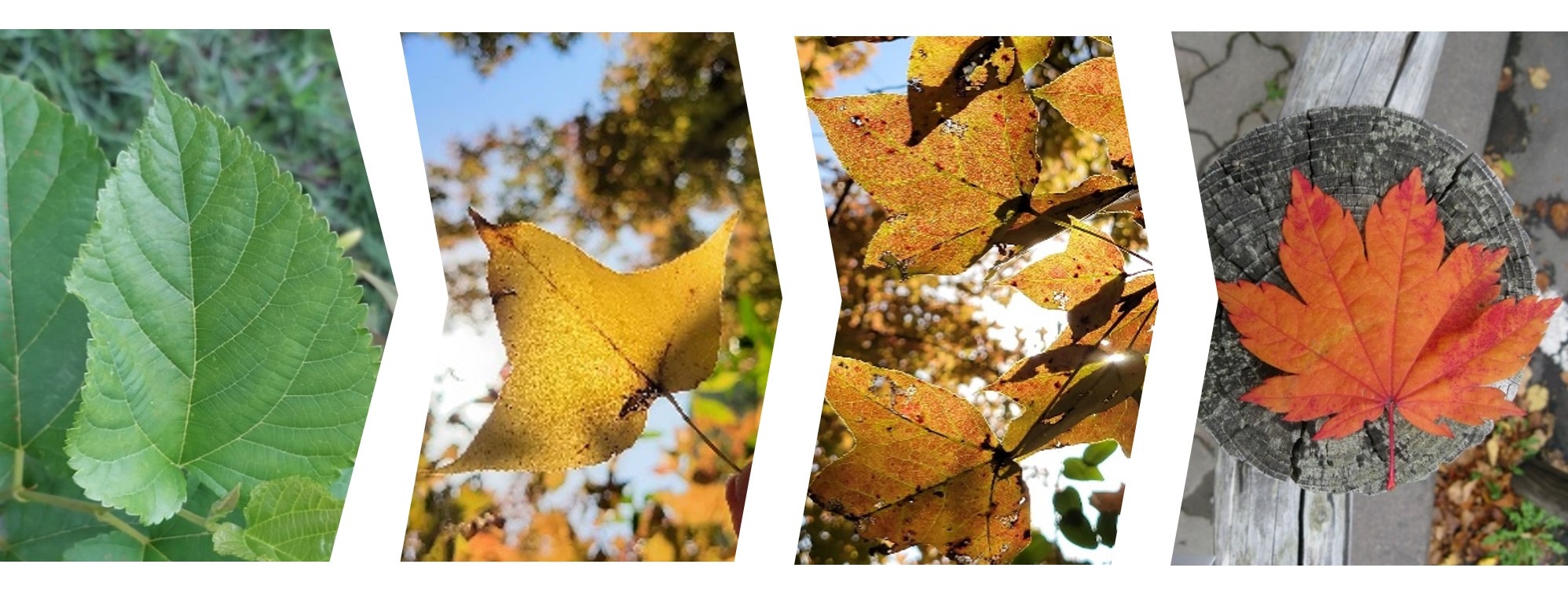
Newly grown leaves have a high proportion of chlorophyll and appear green in colour. Chlorophyll facilitates photosynthesis and produces nutrients
As autumn approaches, shorter daylight hours trigger the breakdown of chlorophyll. Carotenoids that were previously masked by the colour of chlorophyll begin to reveal, resulting in the characteristic yellow colours of fall foliage.
Anthocyanins, another pigment found in leaves, are water-soluble and give leaves a red colouration. They absorb blue-green wavelengths of visible light and help protect leaves from ultraviolet radiation.
In response to sunny and dry weather, some species of trees produce higher concentration of sugar. This triggers the release of anthocyanins and results in the vibrant red colour leaves in autumn.
The colours of leaves are determined by the proportion of natural pigments they contain